
Interlock Installation in a Non-Owned Vehicle — West Virginia
Free to compare
The Owner-Approval Requirement Most Applicants Miss
You've been approved for West Virginia's Motor Vehicle Alcohol and Drug Test and Lock (Interlock) Program. You completed the Safety and Treatment Program enrollment within 60 days. You're ready to install the device and start driving again. But you don't own a vehicle—you'll be driving a family member's car, a partner's truck, or a friend's vehicle. The West Virginia DMV Interlock Section requires written approval from the registered owner before your provider can install the device. That approval requirement is procedurally straightforward but practically complicated.
The written approval itself is simple: the registered owner signs a statement permitting installation. But three questions stop most applicants before they reach that signature: Does the owner's insurance policy cover a driver with an active DUI revocation and an interlock device? Who is liable if you violate program rules and the device locks while the owner needs the vehicle? What happens to the owner's insurance rates when their carrier learns an interlock-restricted driver will be operating the vehicle regularly?
“The registered owner's insurance policy must cover you as a listed driver with an interlock restriction—most standard policies exclude drivers with active DUI revocations unless explicitly added.”
See Who Insures West Virginia Drivers After a DUI
Get My West Virginia DUI Insurance Quote20 business days
WV Interlock Processing Window
The West Virginia DMV Interlock Section processes applications and approves installation within 20 business days after your provider submits required documents, including the owner's written approval. Missing any required document restarts the clock.
West Virginia Division of Motor Vehicles Interlock Section
What the Written Approval Actually Requires
West Virginia law does not prescribe a specific approval form. The registered owner provides a signed statement confirming they authorize interlock installation in their vehicle and understand the device will remain installed for the duration of your program participation. The statement must include the vehicle's year, make, model, and VIN. The owner's signature must be notarized in most counties, though notarization is not explicitly required by state statute—DMV clerks and interlock providers request it to prevent disputes.
The approval does not transfer ownership, create a lease, or grant you legal title to the vehicle. It is permission to install and operate the interlock device only. The registered owner retains all ownership rights and can revoke permission at any time, though revocation triggers immediate program non-compliance and your restricted driving privilege ends until you secure another approved vehicle.
The approval statement must be submitted to your interlock provider before installation. The provider forwards it to the DMV Interlock Section as part of your enrollment packet. If the owner revokes approval after installation, the provider removes the device and notifies the DMV within 48 hours. You cannot drive legally until you provide a new vehicle and new owner approval.
The registered owner's insurance policy must cover you as a listed driver with an interlock restriction. Most standard auto policies exclude drivers with active DUI revocations unless explicitly added by endorsement.


Liability Questions the Approval Does Not Answer
The written approval permits installation but does not address liability when program violations occur. West Virginia's interlock program requires you to pass every breath test, submit to all rolling retests, and avoid tampering or circumvention. Violations trigger escalating consequences: warnings for first violations, extended program duration for repeated violations, and immediate revocation for tampering or failed tests indicating alcohol use.
When a violation occurs, the device enters a lockout period. The vehicle will not start until you visit your provider for a reset. If the owner needs the vehicle during that lockout—for work, medical appointments, or family obligations—they cannot use it. The approval does not obligate you to pay for alternative transportation, rental vehicles, or lost wages the owner incurs during lockout periods. Most owners do not anticipate this consequence when signing the approval.
Similarly, if you drive outside approved purposes—West Virginia's interlock program allows driving to and from work, medical appointments, the interlock service provider, DUI education classes, and court-ordered obligations—and the owner's vehicle is impounded or towed, the owner is responsible for towing and storage fees. The approval does not shift financial liability for program violations to you unless you and the owner execute a separate written agreement addressing those costs.
$50
WV License Reinstatement Fee
After completing the three-year interlock program and satisfying all other reinstatement conditions, you pay a $50 reinstatement fee to the West Virginia DMV to restore full driving privileges. This fee is separate from interlock installation, monthly monitoring, and removal costs.
West Virginia Division of Motor Vehicles
When the Owner Cannot or Will Not Provide Approval
If the registered owner refuses approval—because their insurer will not cover you, because they cannot afford the premium increase, or because they are unwilling to accept liability risk—you cannot install an interlock device in their vehicle. West Virginia does not allow interlock installation without written owner consent. Your options narrow to purchasing a vehicle in your name or leasing a vehicle under a lease agreement that permits interlock installation.
Purchasing a vehicle while your license is revoked is legal in West Virginia. You can buy and register a vehicle in your name even though you cannot drive it without an active interlock-restricted license. Once you own the vehicle, you provide your own approval for installation, eliminating the owner-consent obstacle. You must still secure insurance—either a standard policy if a carrier will write you, or a non-owner policy converted to an owner policy once you purchase the vehicle. Financing a vehicle with an active DUI revocation is difficult; most lenders require full coverage (comprehensive and collision) and many decline applicants with recent DUI convictions.
What Happens After Installation
Once the registered owner provides written approval, your interlock provider installs the device and submits enrollment documents to the West Virginia DMV Interlock Section. Processing takes 20 business days. After approval, you receive a restricted license authorizing you to drive the approved vehicle for approved purposes only. You must carry proof of enrollment, proof of insurance, and your restricted license whenever you drive.
The device requires monthly calibration and data downloads. You pay the provider's monthly monitoring fee—typically $70 to $100 per month—for the duration of the program. If you change vehicles, you must notify your provider and the DMV Interlock Section, secure written approval from the new vehicle's registered owner, and pay for device removal from the old vehicle and installation in the new one. Each vehicle change restarts the approval and processing cycle.
If the registered owner revokes approval at any point, your restricted driving privilege ends immediately. You cannot drive legally until you secure another approved vehicle and complete the approval process again. The three-year program clock does not stop during gaps in vehicle access—time continues to run from your conviction date regardless of whether you have an approved vehicle.
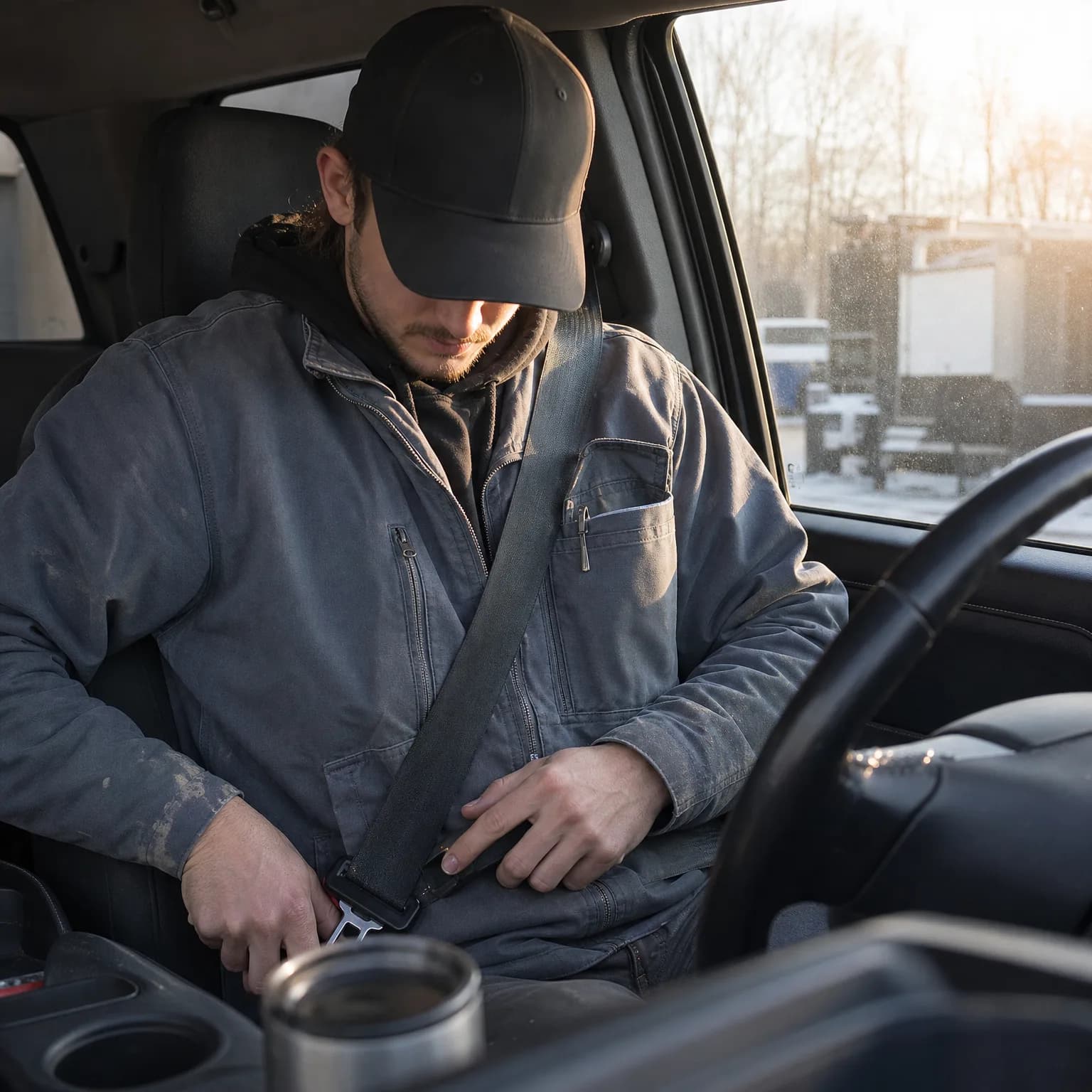
Securing Coverage That Covers the Interlock Restriction
West Virginia does not require SR-22 or any financial-responsibility certificate filing. The old certificate framework under WV Code 17D-4-15 through 17D-4-20 is repealed. Reinstatement after DUI revocation requires only current proof of West Virginia liability insurance—the insurer's WV-1B Certificate of Insurance—plus the $50 reinstatement fee. But the insurance itself must cover you as an interlock-restricted driver, and not all carriers write that risk.
If you are driving a vehicle you do not own, the registered owner's policy must add you by endorsement or you must carry a non-owner policy in your name. If you purchase a vehicle, you need a standard owner policy from a carrier that writes high-risk drivers. Carriers writing interlock-restricted drivers in West Virginia include Dairyland, Geico, Progressive, National General, The General, and Root. Compare quotes from multiple carriers—premium variation for high-risk drivers is significant, and the lowest-cost carrier for clean-record drivers is rarely the lowest-cost carrier for DUI revocations. Secure coverage before installation; the DMV Interlock Section will not approve your application without proof of insurance covering the interlock-restricted period.
Insurance Coverage for Interlock-Restricted Drivers in Non-Owned Vehicles
Standard auto insurance policies exclude drivers with DUI convictions and active revocations unless the carrier explicitly adds them by endorsement. The registered owner must contact their insurer, disclose your DUI revocation and interlock restriction, and request that you be added as a listed driver. Many carriers decline to add interlock-restricted drivers to existing policies. Others agree but increase the owner's premium significantly—industry data shows DUI-related endorsements raise premiums 61-78% in West Virginia. The owner bears that cost increase for the duration of your program participation, typically three years from your conviction date.
If the owner's carrier refuses the endorsement, you have two options. The owner can switch to a carrier that writes high-risk drivers with interlock restrictions—carriers writing this market in West Virginia include Dairyland, Geico, Progressive, National General, The General, and Root. Alternatively, you can purchase a non-owner liability policy in your own name. A non-owner policy satisfies West Virginia's compulsory insurance requirement and covers liability when you drive vehicles you do not own, including the approved interlock vehicle. The non-owner policy does not cover the vehicle itself—the owner's policy still covers physical damage to their vehicle—but it covers your liability to third parties and satisfies the DMV's insurance verification requirement.
Get Your Free Quote
Get My West Virginia DUI Insurance QuoteFrequently Asked Questions
Can I install an interlock device in a vehicle I do not own in West Virginia?
Yes, if the registered owner provides written approval. The approval must include the vehicle's year, make, model, and VIN, and the owner's signature is typically notarized. The owner's insurance policy must also cover you as a listed driver with an interlock restriction.
What happens if the vehicle owner revokes approval after installation?
Your restricted driving privilege ends immediately. The interlock provider removes the device and notifies the West Virginia DMV within 48 hours. You cannot drive legally until you secure another approved vehicle and complete the approval process again.
Does the registered owner's insurance cover me if I have a DUI revocation?
Not automatically. Standard auto policies exclude drivers with active DUI revocations unless the carrier adds you by endorsement. The owner must contact their insurer, disclose your revocation and interlock restriction, and request the endorsement. Many carriers decline or raise premiums significantly.
Can I buy my own insurance instead of being added to the owner's policy?
Yes. You can purchase a non-owner liability policy in your name. It satisfies West Virginia's compulsory insurance requirement and covers your liability when driving vehicles you do not own, including the approved interlock vehicle. The owner's policy still covers physical damage to their vehicle.
Who pays if the interlock device locks and the owner cannot use their vehicle?
The written approval does not address this. If a program violation triggers a lockout, the vehicle will not start until you visit your provider for a reset. The owner cannot use the vehicle during that period, and the approval does not obligate you to pay for their alternative transportation or lost wages unless you execute a separate agreement.
How long does it take to get approved for the interlock program in West Virginia?
The West Virginia DMV Interlock Section processes applications within 20 business days after your provider submits required documents, including the owner's written approval and proof of insurance. Missing any document restarts the processing clock.
Can I drive any vehicle once I am approved for the interlock program?
No. You can only drive the specific vehicle listed on your restricted license. If you change vehicles, you must notify your provider and the DMV, secure written approval from the new vehicle's owner, and pay for device removal and reinstallation. Each vehicle change restarts the approval process.