
Out-of-State DUI — West Virginia License
Free to compare
Your Out-of-State DUI Just Hit West Virginia
You were arrested for DUI in Ohio, Pennsylvania, Virginia, or another state. You handled the court case there, paid the fines, maybe completed their DUI program. Then weeks or months later, West Virginia's Division of Motor Vehicles sent you a suspension notice. The conviction followed you home through the Interstate Driver's License Compact, a data-sharing agreement that reports out-of-state alcohol and drug convictions to your home state's licensing authority.
West Virginia treats an out-of-state DUI conviction exactly as if it happened in West Virginia. The suspension period, reinstatement requirements, and insurance obligations are all governed by West Virginia law — not the convicting state's rules. This creates confusion: drivers assume completing the other state's requirements closes the case, but West Virginia imposes its own separate reinstatement pathway.
“West Virginia treats an out-of-state DUI conviction exactly as if it happened in West Virginia — the suspension period and reinstatement requirements are governed by WV law, not the convicting state's rules.”

See Who Insures West Virginia Drivers After a DUI
Get My West Virginia DUI Insurance Quote180-365 days
WV DUI Suspension Period
West Virginia suspends your license for six months to one year after an out-of-state DUI conviction, regardless of what suspension the convicting state imposed. The period is set by West Virginia statute and runs from the date WV's DMV processes the conviction report, not from your original arrest or conviction date.
West Virginia Division of Motor Vehicles revocation schedule
What the Interstate Compact Actually Does
The Interstate Driver's License Compact is a reciprocal reporting agreement among 45 states and the District of Columbia. When you are convicted of DUI in a member state, that state's court system reports the conviction to the National Driver Register. West Virginia's DMV receives the report and applies West Virginia's suspension rules to your license.
The Compact does not transfer the convicting state's suspension to West Virginia. It transfers the conviction fact only. West Virginia then imposes its own suspension period, its own reinstatement fees, and its own program requirements. Completing Pennsylvania's ARD program or Ohio's intervention program does not satisfy West Virginia's Safety and Treatment Program requirement. The two processes are separate.
West Virginia is a Compact member state. If you hold a West Virginia license and are convicted of DUI anywhere in the Compact network, the conviction will reach West Virginia's DMV within 30 to 90 days of the court's final disposition. The suspension notice arrives by mail at your address of record.

West Virginia will not lift the suspension until you complete West Virginia's own Safety and Treatment Program, even if you already completed the convicting state's DUI education requirement.

Can You Drive During the Suspension
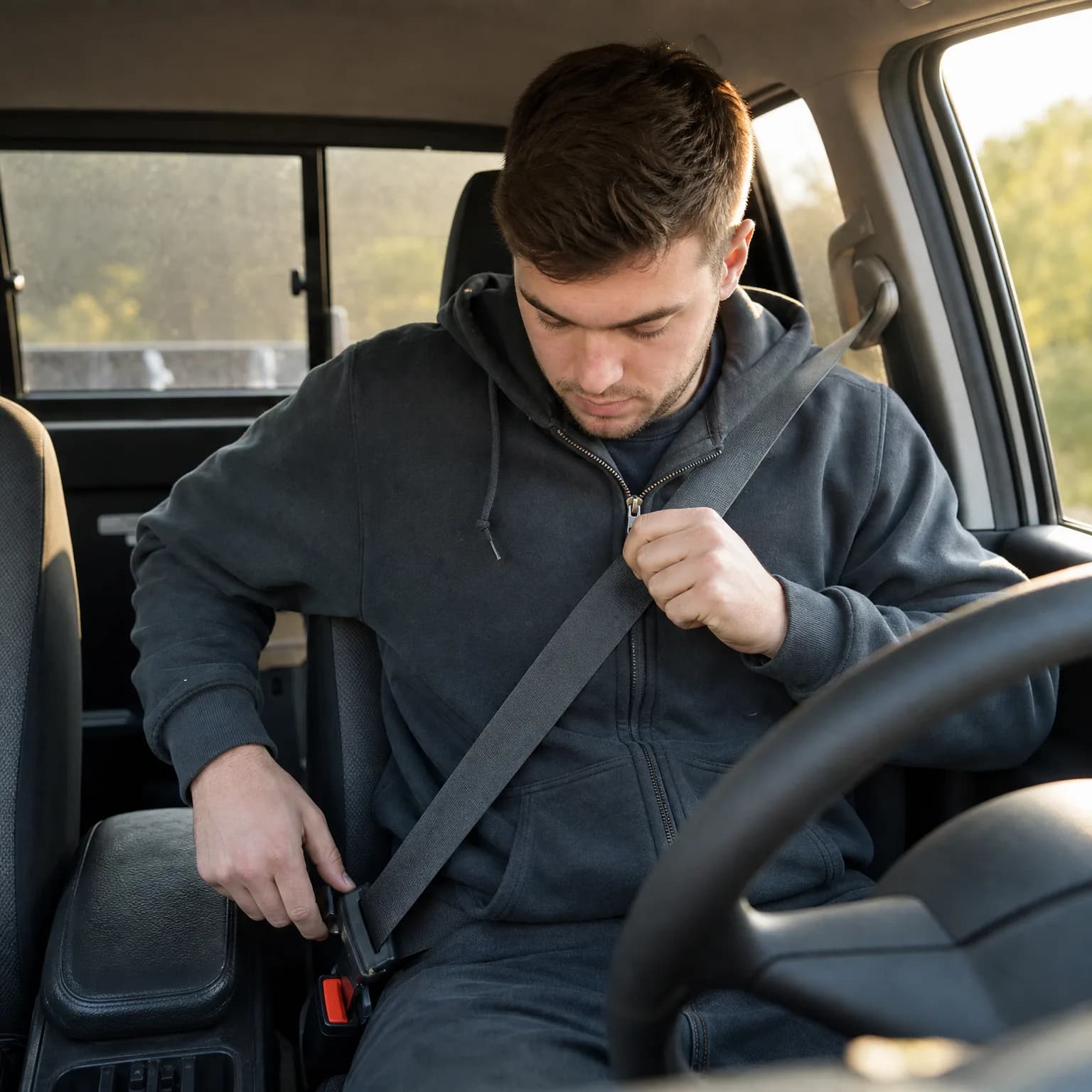
West Virginia offers one interim driving option: the Motor Vehicle Alcohol and Drug Test and Lock (Interlock) Program. This is not a general hardship license. It is a DUI-specific program that allows you to drive with an ignition interlock device installed in your vehicle in lieu of serving the full suspension period. The program is available only for alcohol-based DUI revocations — drug DUI convictions are not eligible.
To qualify, you must own the vehicle or have written approval from the owner to install the interlock device. You must enroll in and complete the Safety and Treatment Program within 60 days of beginning the Interlock Program. You cannot be appealing the revocation. Non-West Virginia residents must provide a copy of their resident-state license within 30 days. The application is submitted to the WV DMV Interlock Section before your scheduled revocation date if you want to drive in lieu of suspension, or after the revocation begins if you missed the initial window.
Processing takes approximately 20 days from the date the interlock provider submits required documents to the DMV. During that window, you cannot drive legally. Once approved, you may drive any vehicle equipped with the interlock device for any purpose — work, school, medical appointments, personal errands. The interlock period runs concurrently with your suspension period and satisfies the revocation requirement if you complete it without violations.
If you do not qualify for the Interlock Program or choose not to enroll, you serve the full suspension period without driving. West Virginia does not offer occupational licenses, work permits, or restricted licenses for non-alcohol DUI suspensions or for drivers who do not meet Interlock Program eligibility criteria.
$50
WV Reinstatement Base Fee
West Virginia's base reinstatement fee is $50 after a DUI suspension. Additional administrative fees may apply if you accumulated other violations during the suspension period or if you drove while suspended. The fee is paid to the Division of Motor Vehicles at the time of reinstatement, after you complete the Safety and Treatment Program and provide proof of insurance.
West Virginia Division of Motor Vehicles fee schedule

What About Insurance Filing Requirements
West Virginia does not require SR-22 or FR-44 certificates for DUI reinstatement. The old financial responsibility certificate framework — West Virginia Code 17D-4-15 through 17D-4-20 — was repealed. West Virginia now enforces compulsory insurance through the Online Insurance Verification Program, a real-time database that tracks active policies.
At reinstatement, you provide your insurer's WV-1B Certificate of Insurance to the DMV. This is a standard proof-of-insurance form issued by any carrier licensed to write auto insurance in West Virginia. The certificate confirms you carry at least the state's minimum liability limits. There is no multi-year filing requirement, no ongoing verification beyond the standard enforcement system, and no separate filing fee. If your policy lapses after reinstatement, the insurer reports the lapse to the DMV through the Online Insurance Verification Program, which may trigger a new suspension for driving uninsured — but that is the standard enforcement mechanism, not a DUI-specific filing obligation.
Getting Insured After an Out-of-State DUI
An out-of-state DUI conviction appears on your driving record and affects your insurance rates the same way an in-state conviction does. Carriers classify DUI convictions as major violations regardless of where they occurred. You will likely be moved to a non-standard tier or face significant rate increases when your current policy renews.
Not all carriers write policies for drivers with DUI convictions. Some standard carriers will non-renew your policy when the conviction appears on your record. Carriers that do write post-DUI policies in West Virginia include Dairyland, Geico, Progressive, National General, The General, and Root. State Farm and Farmers also write DUI policies but may require higher down payments or shorter payment terms. Compare quotes from multiple carriers — rate differences for high-risk drivers are wider than for clean-record drivers, and the cheapest carrier varies by county and age bracket.
If you do not currently own a vehicle, you need a non-owner policy to satisfy West Virginia's proof-of-insurance requirement at reinstatement. A non-owner policy provides liability coverage when you drive a vehicle you do not own — a rental, a borrowed car, or a vehicle you will purchase after reinstatement. Geico, Progressive, Dairyland, National General, The General, Travelers, and USAA all write non-owner policies in West Virginia for drivers with DUI convictions. The non-owner policy generates the WV-1B certificate the DMV requires, and you can convert it to a standard policy when you buy or lease a vehicle.

Start With the Safety and Treatment Program
Reinstatement cannot proceed until you complete West Virginia's Safety and Treatment Program. Enroll as soon as you receive the suspension notice — the program takes several weeks to complete, and delaying enrollment extends the period before you can drive again. Contact a state-certified provider to schedule your intake assessment. If you plan to apply for the Interlock Program, enrollment in the Safety and Treatment Program must occur within 60 days of beginning the interlock period, so coordinate both timelines carefully.
Once you complete the program, gather proof of completion, your WV-1B Certificate of Insurance from a carrier writing your risk profile, and payment for the reinstatement fee. Submit everything to the Division of Motor Vehicles. Processing reinstatement takes additional time after submission, so plan for at least two to three weeks between completing the program and receiving your reinstated license. Compare carriers that write DUI policies in West Virginia now — rates and eligibility vary significantly, and starting the insurance process early prevents delays at reinstatement.
West Virginia's Reinstatement Requirements
You must enroll in and complete West Virginia's Safety and Treatment Program, a state-approved DUI education and assessment course. The program includes a substance abuse evaluation, education sessions, and treatment recommendations if indicated. Enrollment must occur within 60 days of beginning the Motor Vehicle Alcohol and Drug Test and Lock (Interlock) Program if you choose that option, or before reinstatement if you serve the full suspension period. The program is administered by state-certified providers; out-of-state DUI programs do not substitute.
You must pay West Virginia's reinstatement fee. The base reinstatement fee is $50, but additional administrative fees may apply depending on your suspension history and whether you drove during the suspension period. You must also provide current proof of West Virginia liability insurance in the form of an insurer-issued WV-1B Certificate of Insurance. West Virginia does not use SR-22 or FR-44 certificates — the old financial responsibility certificate framework was repealed. The WV-1B certificate confirms you carry at least West Virginia's minimum liability limits: $25,000 per person for bodily injury, $50,000 per accident, and $25,000 for property damage.
Get Your Free Quote
Get My West Virginia DUI Insurance QuoteFrequently Asked Questions
Does West Virginia recognize an out-of-state DUI conviction?
Yes. West Virginia receives out-of-state DUI convictions through the Interstate Driver's License Compact and suspends your West Virginia license for 180 to 365 days. The suspension follows West Virginia's rules, not the convicting state's rules.
Do I need an SR-22 after an out-of-state DUI in West Virginia?
No. West Virginia does not use SR-22 or FR-44 certificates. At reinstatement, you provide a standard WV-1B Certificate of Insurance from your carrier proving you carry West Virginia's minimum liability limits. There is no multi-year filing requirement.
Can I get a hardship license in West Virginia after an out-of-state DUI?
West Virginia does not offer general hardship licenses. The only interim driving option is the Motor Vehicle Alcohol and Drug Test and Lock (Interlock) Program, which allows you to drive with an ignition interlock device installed. The program is available only for alcohol-based DUI revocations.
How long does West Virginia suspend your license for an out-of-state DUI?
West Virginia suspends your license for 180 to 365 days after an out-of-state DUI conviction. The suspension period is set by West Virginia law and runs from the date the DMV processes the conviction report, not from your original arrest or conviction date.
What is required to reinstate a West Virginia license after an out-of-state DUI?
You must complete West Virginia's Safety and Treatment Program, pay the $50 base reinstatement fee, and provide a WV-1B Certificate of Insurance proving you carry West Virginia's minimum liability limits. Completing the convicting state's DUI program does not satisfy West Virginia's requirement.
Will my insurance company find out about an out-of-state DUI?
Yes. The conviction appears on your West Virginia driving record and your insurer will see it at your next policy renewal. Most carriers classify DUI as a major violation and will either non-renew your policy or move you to a non-standard tier with higher rates.
Can I drive in West Virginia while my license is suspended for an out-of-state DUI?
Only if you are approved for the Interlock Program. You must apply to the WV DMV Interlock Section, install an ignition interlock device in your vehicle, and enroll in the Safety and Treatment Program within 60 days. If you do not qualify or choose not to enroll, you cannot drive legally during the suspension period.